MOLECULAR BIOPHYSICS
Thesis Title is: "Single Molecule Studies of Molecular Motor of Myosin"
Focus and Content of the thesis
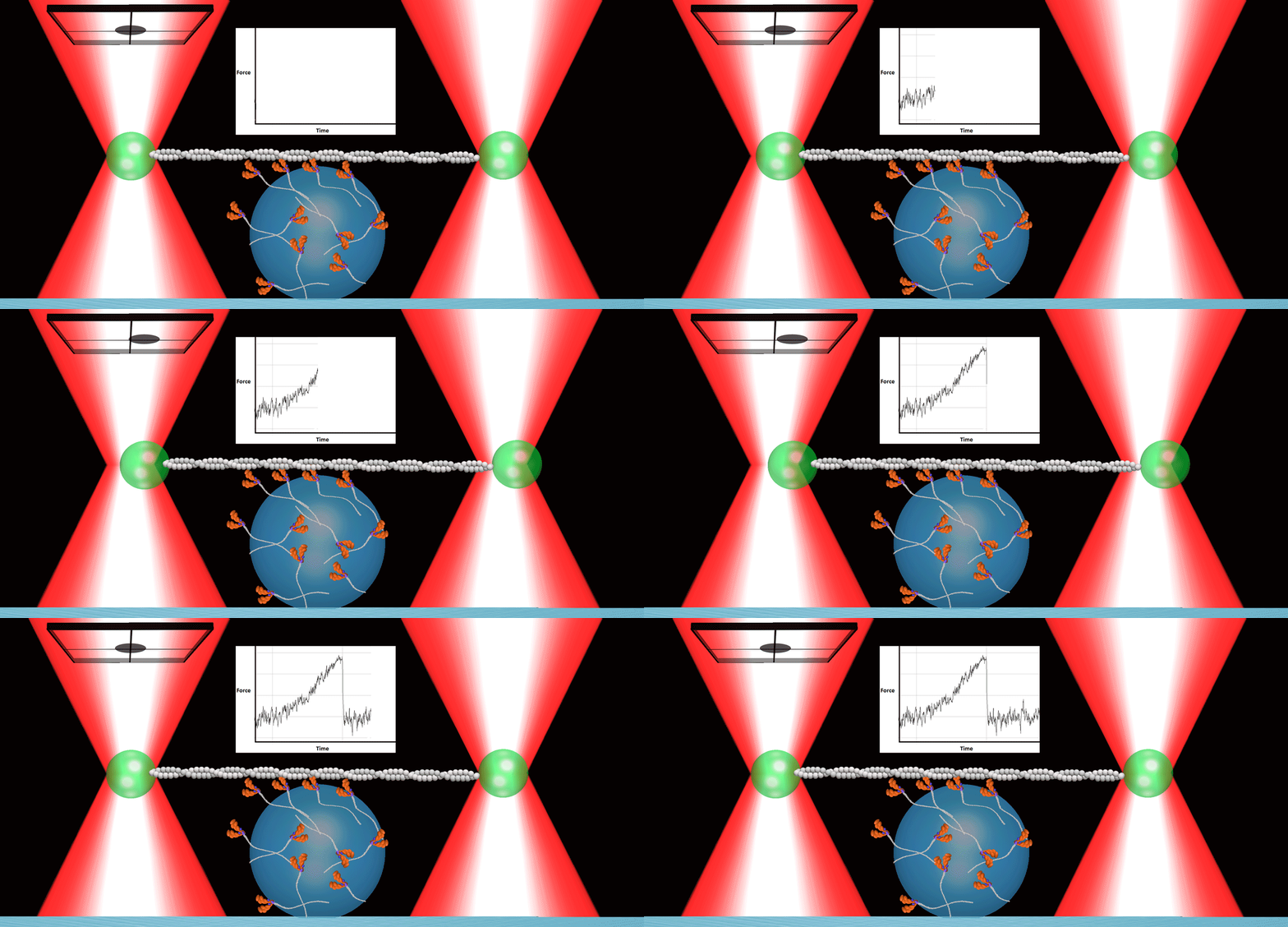
I have worked on “actin-based molecular motors”. Molecular motors participate in various essentials functions of the cell, such as intercellular trafficking, movement, insertion and dynamic maintenance of numerous structures, cell division and signaling. Many of single molecule methods devised to prove how molecular Motor work holds great promise for broader application in other fields.
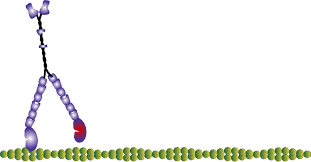
I was interested with the movement mechanism of myosin V, Specifically, how it walks and interacts with actin to covert the energy from ATP hydrolysis into mechanical work.
Overview:
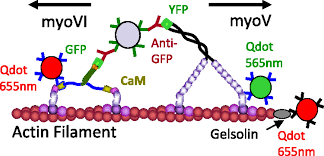
Myosins are eukaryotic actin dependent molecular motors important for a broad range of functions like muscle contraction, vision, hearing,cell motility and host. Muscle myosin proteins(Myosin V and VI) are known as biological molecular motors, which move along actin filaments powered by the hydrolysis of ATP. Myosin V and VI are processive motors.Processivity means
that the motor undergoes multiple catalytic cycles and coupled mechanical advances for each diffussional encounter with its actin. Although myosin II are the most well understood motors, recently myosin V has become the centre of the experimental spot light.
How the two heads of myosin V coordinated to produce steps is a central and unresolved question. Mechanism, in which myosins generate force and motion, has been also the focus of intense investigation for the decades.
This thesis reviewed on the movement mechanism of contractile protein associated with muscle contraction, Specifically, how myosin molecular motor walks and interacts with actin to convert the ATP hydrolysis into mechanical work.